
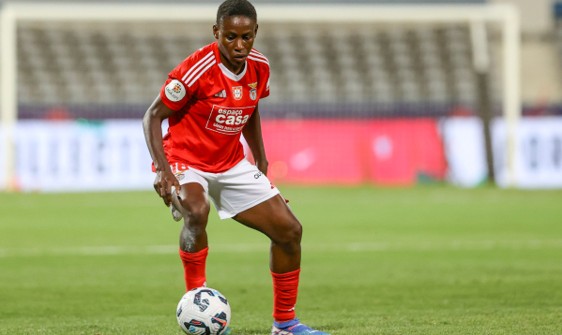
Women’s football in Portugal is no longer a simple story of local development plus a few imported names. The stronger reading is tactical: different player backgrounds can change how a team presses, circulates possession, attacks depth and protects transitions. African athletes are part of that story because several teams now rely on players whose football education brings different rhythms into the same dressing room.
For supporters, this has also changed how the game is followed. Match clips, squad lists, live discussion and football-related betting platforms now sit inside the same viewing routine, with jabula bets login connecting users to live markets, accumulator options, match odds, and mobile betting access throughout the football week.
This article looks at that question through player threads rather than transfer noise. Christy Ucheibe and Michaely Bihina at Benfica, Melany Fortes at Braga and Irlanda Lopes at Vitória SC all show different tactical entries into the same debate. The point is not nationality as a label. The point is how specific profiles affect tempo.
Multinational squads do not just add variety
A multinational squad changes more than the passport column on a team sheet. It can change the first pass after regaining the ball, the angle of the press, the timing of a forward run or the way a goalkeeper manages pressure. These details are small, but they shape match rhythm.
In women’s football, tempo is often misunderstood as simple speed. A fast player can accelerate an attack, but a team’s tempo also depends on when it slows down. A midfielder who delays pressure by one touch, a goalkeeper who waits before passing, or a forward who bends a run instead of sprinting straight can all change the shape of a match.
African player threads are useful because they often reveal this balance clearly. Not every African athlete has the same profile, and it would be lazy to pretend otherwise. The value comes from watching how different traits fit into different team models.
Four player threads worth tracking
The following table is a viewing guide, not a ranking. It links player profile to tactical influence so the reader can watch matches with a clearer eye.
|
Player |
Team Context |
Tempo Thread |
What to Watch |
|
Christy Ucheibe |
Benfica |
Defensive control and second-ball timing |
How she protects central space after Benfica lose the ball. |
|
Michaely Bihina |
Benfica |
Goalkeeper patience under pressure |
How her positioning affects whether the team plays short or clears long. |
|
Melany Fortes |
Braga |
Depth running and wide-to-central movement |
How she stretches the back line before arriving in scoring areas. |
|
Irlanda Lopes |
Vitória SC |
Forward pressure and penalty-box occupation |
How she uses movement to unsettle centre-backs and open space. |
This type of table helps separate reputation from function. A player does not need to dominate the ball to influence tempo. Sometimes the key action is a covering run, a pressure angle or a movement that drags a defender away from the next receiver.
For coaches and analysts, these threads are practical. They show where a team can gain seconds. In football, gaining one second before pressure arrives can be the difference between a controlled attack and a rushed clearance.
Benfica’s balance: Ucheibe and Bihina
Benfica provide one of the clearest examples of how different African profiles can affect separate phases of play. Ucheibe’s value is connected to control without spectacle. Whether used in defensive or midfield zones, her role often revolves around covering central lanes, reading second balls and reducing the space opponents want to attack.
That changes tempo because a team can commit more players forward when it trusts the recovery structure behind the ball. If the first attack fails, the next moment matters. Ucheibe’s type of profile is important there because the match can either become open and chaotic or remain inside Benfica’s preferred rhythm.
Bihina brings a different layer. A goalkeeper does not only stop shots. She can slow the opponent’s press, invite pressure, or choose the safer release when a build-up pattern becomes crowded. In a league where top teams often face opponents defending deeper, the goalkeeper’s choices influence how quickly the team restarts attacks.
The shared lesson is that tempo control is not only an attacking concept. Defensive timing and goalkeeper decisions can be just as influential as a forward’s sprint.
Braga’s use of forward depth
Melany Fortes gives Braga a more vertical thread. Her profile points toward depth, rupture movements and direct running. Those qualities can be especially useful when a team wants to move from possession into acceleration without adding extra touches.
A forward who threatens space behind the defence affects more than the moment she receives the ball. Centre-backs drop earlier, full-backs become less aggressive, and midfielders may hesitate before stepping up. That hesitation gives the attacking team a cleaner passing lane.
This is why wide-to-central movement is so valuable. When a forward starts outside, the defender must decide whether to follow or pass her on. If communication is late, the run creates a break in the line. If communication is early, another teammate may find space between defenders.
Fortes’ type of profile helps explain why squad variety matters. A team built only on short combinations can become predictable. A runner who attacks depth forces opponents to defend both the ball and the space behind them.
Vitória SC and the forward as a pressure tool
Irlanda Lopes brings another angle: the forward as a pressure tool. A striker is often judged by goals, but in a developing or newly promoted side, the first job may be to make the opposition uncomfortable. That can mean pressing centre-backs, occupying both central defenders, or winning territory from imperfect clearances.
This kind of role changes tempo by interrupting the opponent’s build-up. A forward who presses at the right angle can force the ball toward a touchline. Once the ball goes there, the defending team can compress the space and turn pressure into possession.
The same player can also shape attacking tempo. A forward who occupies the box gives wide players a target and midfielders a reason to deliver earlier. Even when the delivery does not lead to a goal, repeated box occupation changes how defenders hold their line.
For Vitória, this type of profile matters because match control is not always built through possession dominance. Sometimes it starts with making the next pass difficult for the opponent.
What multinational teams teach viewers
The main mistake is to treat multinational squads as a soft cultural story only. Culture matters, but the match impact is tactical. Different training backgrounds and playing histories can create options that a uniform squad may not naturally produce.
