
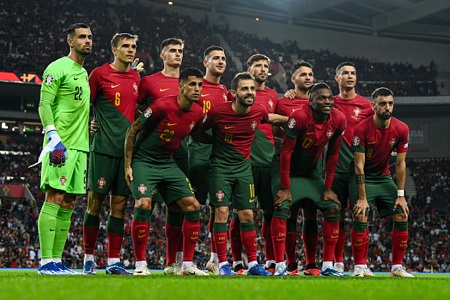
Roberto Martínez named his 27-man squad for the 2026 FIFA World Cup on Tuesday, and the draw has given Portugal what looks, on paper, to be a very manageable group. Drawn alongside the Democratic Republic of Congo, Uzbekistan and Colombia in Group K, fans looking for top flight action and accumulator picks will find plenty to consider across all three of Portugal’s group-stage matches, with the reigning UEFA Nations League champions opening against DR Congo in Houston on 17 June.
Portugal are the reigning UEFA Nations League champions and among the pre-tournament favourites heading into North America. The path to the last 16 looks comfortable, but football does not always follow the script. Here is a breakdown of each opponent and what the history between these sides looks like.
Democratic Republic of Congo - 17 June, Houston
DR Congo have never faced Portugal in a competitive international. In fact, records show the two nations have not met at senior level at all, which makes this a genuinely unknown fixture for both camps.
The Congolese qualified through the CAF process, navigating a difficult route to reach their first World Cup since 1974, when they competed as Zaire. They are no pushover in African football, but the step up to this level is significant. Their squad is built largely around players competing in African leagues, with limited exposure to European top-flight football at this level of intensity.
Portugal should win this comfortably. Martínez will be aware that a slow start in an opener can set an anxious tone for the group, so getting the job done efficiently against DR Congo without taking unnecessary risks will be the priority on day one.
Uzbekistan - 23 June, Houston
Uzbekistan are making their first ever appearance at a FIFA World Cup. They qualified from the Asian section, becoming the first Central Asian nation to reach the tournament. Portugal and Uzbekistan have no previous meeting to draw on at senior international level, so there is no head-to-head history to reference.
The White Wolves, as they are known, will be full of energy and have nothing to lose. Their squad has developed quickly through Asian football, and the AFC qualifying process is considerably more competitive than it once was. That said, the gulf in squad depth between a Uzbekistan side and a Portugal squad that includes Bernardo Silva, Bruno Fernandes and Ruben Dias is very large.
Uzbekistan’s presence in the group does not alarm Portugal, but naive underestimation would be costly. A side playing without pressure at their first World Cup can occasionally cause problems, particularly if the opposition switches off.
Colombia - 27 June, Miami Gardens
This is the fixture that will define how Portugal finish the group. Colombia are the most credible opposition by some distance, and the two nations have actually never met at senior level before, making this a first-ever encounter in competitive football.
Colombia reached the 2024 Copa America final, where they were beaten by Argentina, and they carry genuine attacking firepower. Luis Díaz, who plays for Bayern Munich, is their standout threat. Their recent form going into the tournament has been mixed, with losses to Croatia (1-2) and France (1-3) in March 2026 friendlies, though they beat Bolivia, Venezuela and Mexico convincingly during the South American qualifying phase.
Martínez may choose to rotate for the earlier matches with this game in mind. Colombia, under their own pressure to reach the knockout rounds in front of a large partisan crowd in Florida, will come into the final group game with real intent. It is the closest thing to a meaningful test the group offers Portugal, and how the Seleção handle that occasion will matter.
The bigger picture
On any objective assessment, Portugal have been handed a very kind group. Two opponents with no World Cup pedigree at this level and a Colombia side that, while talented, has shown vulnerabilities in recent months. The Seleção should collect maximum points from their first two games and be able to approach the Colombia fixture with top spot already secured, or at least within reach.
The concern, if there is one, is the approach. Portugal’s worst moments at major tournaments have sometimes come when the occasion lacked urgency. With a squad of this depth and experience, there is no excuse for anything less than full focus from the first whistle against DR Congo. The group is manageable. Making sure they treat opponents with the utmost professionalism is what matters.
