
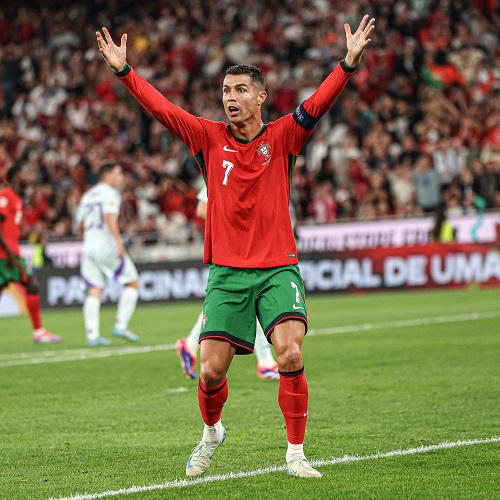
Portugal are in the midst of the World Cup 2026 discussion: proven but still under the spotlight, as big international events have repercussions for reputation. A large part of the fan talk is centred around names, memories and club loyalty. But a World Cup team comparison tool goes further, by placing Portugal side-by-side with France, Spain, Argentina, Brazil, England and all rivals through measurable evidence.
Are Portugal the best placed out of the bunch to win in North America? The answer for Portugal fans is simple. A 2026 World Cup team comparison tool can assist in overcoming gut feeling, as it gathers in one place all the data about teams’ performance, such as expected goals, defensive statistics, possession, form and player rankings.
Going beyond the eye test: The need for data-driven team comparison
Eye test remains important. It’s something that numbers don’t capture: tempo, confidence, leadership. But it can be subject to emotional judgment. One fan might recall Cristiano Ronaldo’s goal scoring prowess, another perhaps the range of skills and playmaking ability of Bruno Fernandes, and a third perhaps the ball control of Vitinha, and forget that there were no particularly good opportunities to make it count.
With objective football data analysis, World Cup team comparison is more balanced. Portugal’s credentials are impressive, having sealed qualification from UEFA Group F with a 9-1 win over Armenia, and winning the 2024-25 Nations League with a penalty shootout win against Spain in the final and sitting 5th in the FIFA rankings as of early June 2026. That profile indicates top-tier quality and the data poses more questions about efficiency and matchup risk.
Numbers put an end to arguments for fans. They offer context for the journalist. They can shine a light on value before the narratives catch up to bettors and fantasy players.
What makes a great World Cup comparison tool?
Some of the features that you should consider include:
A good team analysis tool should have the option to compare football parameters. Instead of being given one number, users should choose goals, expected goals, xG against, possession percentage, pressing actions, set-piece output, shots on target, big chances created, tackles, interceptions and goalkeeper numbers to make their own selection.
Visualizations matter. Whether it is chance creation, control or defensive resistance, radar charts instantly show where Portugal’s focus lies. Line graphs represent form over time (months). Football comparison side-by-side stat tables are useful for a clear comparison of football teams.
Historical data and filters are necessary for good tools. Qualifiers don’t equal finals; Nations League matches don’t equal World Cup group stage games; and league performance comparison can help in the analysis of demanding club seasons. The drill down is important too, since teams are made up of people. If any one of the players João Cancelo, Rúben Dias, Bernardo Silva, Rafael Leão, Gonçalo Ramos or Diogo Costa drive a metric, the tool should indicate it.
This is where SportyTrader’s World Cup team pages come in. Users can browse national-team profiles, recent form, basic results patterns and matchup context, to go deeper in one workflow. For users who prefer a clear starting point instead of an array of tabs, it’s helpful to use this to make World Cup data more usable and browse it side by side to use for a debate, preparation for betting, or content planning for a blog or video.
How to compare World Cup teams: a practical step-by-step guide
Avoid one magic number. It all starts with attack, then against defence, then form and tournament.
Step 1: Benchmarking offensive firepower
Start with goals, xG, expected goals, big chances created and xG per 90. In comparison to Argentina, Brazil may be shooting more and maybe Argentina are converting more because shots are being taken closer to goal. Radar Charts show Efficiency, Bar Charts show Volume. Do the same for Portugal. If Portugal also reach France’s xG but are not converting, the problem is likely to be in the final third, not the ability to create chances.
Step 2: Evaluating defensive solidity with opposition analysis
Next, check out goals conceded, expected goals against, clean sheets, tackles, interceptions and shot locations. Opposition analysis is important because it indicates the opportunities a team gives away and where. For instance, if England play Germany, it will show how well the English can defend the middle of the park and how well the Germans can counter-attack when they lose the ball. An interesting factor for Portugal is whether they are too adventurous with their full-backs, subsequently creating room behind their defence for the opposition to exploit.
Step 3: Gauging team form and momentum
Up-to-date form must be taken into account. A whole qualification campaign can make all the difference when compared to the last five games. Old results and late-season contenders are discovered by a season performance evaluation filter. Although Portugal’s Nations League win is a positive, analysts’ eyes should be on the last three months, minutes and whether Roberto Martínez’s has a stable balance.
From data to decision: using your analysis for predictions
So, are Portugal one of the favourites for the World Cup 2026? Yes, but on condition that they are well ranked, have the squad depth, and a recent trophy to qualify them as genuine contenders alongside France, Spain, Argentina, England and Brazil. Their creators are elite, defenders are experienced, goalkeeper is good and their manager has won silverware.
But data must not lead to overconfidence. One measure is misleading. But possession doesn’t always mean penetration. A weak opposition can be covered up by a low xGA. A winning run involves knockout football, in which the game state, a penalty, travel, temperature and enforced team changes are significant.
The advantage for the bettors is in the ability to identify the statistical discrepancies before the market catches on, such as Portugal vs opponents who expose from deep in the area, underdogs that struggle to defend set-pieces, or favourites whose xG is bolstered by comfortable wins. The answer for analysts is more complicated. Portugal are not touted by most to win outright, but they’re certainly among the best placed and disciplined comparison is the best proof.
