
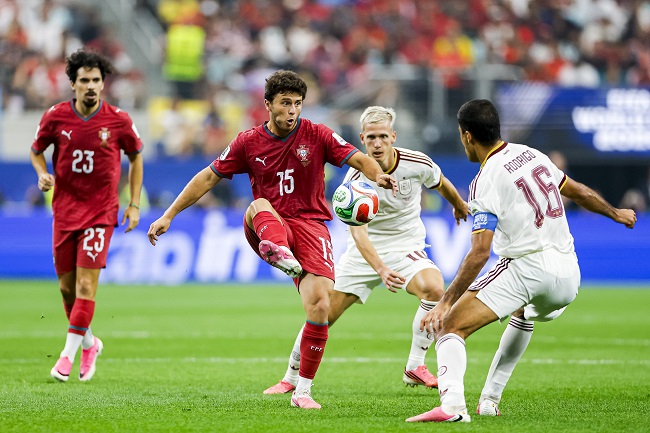
Lack of identity and absence of audacity costs the Seleção dearly at World Cup 2026
A surprise appointment in January 2023, I distinctly remember the enthusiasm that accompanied Roberto Martínez’s first press conference at Cidade do Futebol when he was unveiled as the successor to Fernando Santos as Portugal coach.
“Portugal must always aim to win, be a modern team and have tactical flexibility,” said Martínez. He talked about using different formations and the importance of getting the most out of every player.
It was a breath of fresh air after the Santos era. The Euro 2016 triumph had only accentuated Santos’ belief that defensive solidity and nullifying the opposition were the keys to success in international football.
Performances became wearyingly predictable, there was little or no creative spark, and the chasm between the potential of a fabulously talented squad of players and what they produced on the pitch made the continuation of Santos at the helm untenable.
Three and a half years down the line, and the exact same criticisms can be levelled at Martínez. He failed to mould arguably Portugal’s most talented ever squad into a cohesive team when it mattered most. The lack of attacking courage stood out like a sore thumb.
Opposition first
That tactical flexibility? It is of less value if its main purpose is to negate the opposition.
Hearing Martínez positively enthuse about how Portugal played against Spain was at best galling for Portuguese fans who had looked forward so excitedly to a stacked Seleção taking the game to all-comers at the 2026 World Cup.
“We can be proud. It was our best display of the World Cup,” said Martínez. “We defended really well and we had good aggressiveness without the ball. We played against one of the favourites and we went toe to toe with them. We shut down everything Spain like doing.”
Spain are a brilliant team and it would be naïve to expect Portugal to go gung-ho in this particular match. The problem of a zero-risk approach is it is only justifiable if it leads to results.
This World Cup campaign will be viewed as nothing less than a tremendous wasted opportunity given the personnel available.
“We need to be ourselves”
Bruno Fernandes’ post-match comments following yesterday’s 1-0 defeat against Spain were telling: “I think we have to be ourselves more, look more at what we can do, try and play our own way, and find ways to make teams respect us more.”
Bernardo Silva had alluded to Portugal’s lack of a clear identity in a press conference in between the Colombia and Croatia games: “Some national teams have a very characteristic way of playing. The Germans and Spaniards play in their domestic league which helps create a style. Most of the Portuguese players play outside the country, making it difficult to adapt. Bruno plays a very different style to Vitinha and João Neves, for example.”
Those thoughts were cited by Rúben Dias immediately after the Spain defeat yesterday. “Bernardo talked about this. We have excellent individual talents, but we don’t have a playing concept, like Spain. They all think the same way; they all come out of the same mould. We have to try and find the right balance and it’s not easy, as each player thinks differently.”
Ricardo Quaresma, who was extremely critical of Martínez in the aftermath of the premature exit, put it more bluntly: “He tried 50 different tactics and none of them worked. And here we have the proof.”
Europe or bust
In the light of Portugal’s poor historical record in World Cups outside of Europe – Mexico 1986, South Korea 2002 and Brazil 2014 were disasters; South Africa 2010 and Qatar 2022 were disappointing – perhaps we should not be so surprised at the outcome.
Another forgettable campaign in a foreign continent can be forgiven. The complete absence of any semblance of audacity cannot.
