
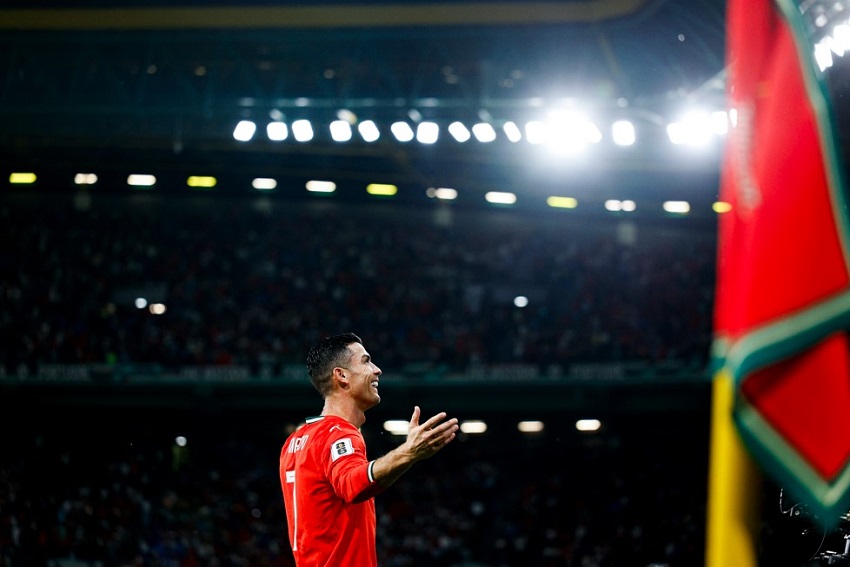
Cristiano Ronaldo has confirmed that he will not return for another FIFA World Cup after Portugal were eliminated by Spain in the round of 16 of the 2026 tournament. The 1–0 defeat at Dallas Stadium ended Portugal’s campaign and closed a remarkable World Cup chapter for one of the most recognised players in football history.
Portugal remained competitive throughout the match but could not turn their attacking opportunities into a goal. Spain secured victory through Mikel Merino in stoppage time, leaving Portugal with almost no opportunity to respond. Ronaldo’s sixth World Cup therefore ended before the quarter-finals, despite Portugal entering the competition with an experienced squad and several established attacking players.
Supporters following Portuguese football news can review match developments, player updates, and tournament information through sources such as the ทางเข้ายูฟ่าเบท section at ufabetpremium.com. Important results and statements should also be compared with official information from FIFA and the Portuguese Football Federation.
Portugal lose to Spain in stoppage time
Portugal were defeated 1–0 by Spain on July 6, 2026, after conceding in the first minute of second-half stoppage time. The match remained goalless for most of the evening, with both sides attempting to control possession without leaving large spaces in defence.
Spain recorded more attempts and forced Diogo Costa into several saves, while Portugal tried to create opportunities through Cristiano Ronaldo, Bruno Fernandes, Rafael Leão and the wide areas. Portugal finished with ten attempts, but only two were on target. Spain produced 15 attempts, including six on target, and showed greater efficiency when the decisive chance arrived.
Rafael Leão’s introduction during the closing stages gave Portugal more direct movement on the left. One of his attacking runs created an opportunity for Bruno Fernandes, whose effort struck the side netting. Portugal appeared to be pushing the match toward extra time before Spain found the winning goal.
The defeat was especially difficult because Portugal had remained within one moment of advancing. They defended with discipline for long periods and continued competing until the final whistle, but Spain’s late breakthrough changed the outcome immediately.
The decisive goal and key moments
Mikel Merino scored the only goal in the 90th minute plus one. Spain moved the ball through Portugal’s defensive structure before Merino broke into space and finished beyond Diogo Costa. The timing of the goal meant Portugal had only the remaining stoppage time to find an equalizer.
Portugal still produced one final opportunity. Bernardo Silva met a delivery with a header during the additional period, but his attempt travelled narrowly wide of the post. That chance became Portugal’s final meaningful action of the tournament.
Earlier, Ronaldo had attempted three shots, while Bruno Fernandes was heavily involved in Portugal’s pressing and attacking organisation. Spain nevertheless completed more passes and broke Portugal’s lines more frequently, allowing the Spanish midfield to control important phases of the match.
Portugal’s journey at the 2026 World Cup
Portugal began the tournament in Group K with a 1–1 draw against the Democratic Republic of Congo. The result placed early pressure on the team, but Portugal responded with a dominant 5–0 victory over Uzbekistan in their second match.
A goalless draw with Colombia completed the group stage. Portugal advanced in second place after collecting five points from three matches. Although the team remained unbeaten, the two draws showed that breaking down organised defensive structures could become a challenge in the knockout rounds.
Portugal then faced Croatia in the round of 32. Croatia took the lead, but Portugal recovered and eventually won 2–1. Gonçalo Ramos scored the decisive goal late in the match, sending the team into a last-16 meeting with Spain.
The campaign therefore included two victories, two draws, and one defeat. Portugal demonstrated its attacking quality in the victory over Uzbekistan and its resilience against Croatia, but the team could not produce the decisive finish required against Spain.
Bruno Fernandes speaks after the elimination
Bruno Fernandes expressed disappointment after Portugal’s exit and admitted that accepting the result was difficult. He explained that the quality and commitment within the squad had raised his expectations, making the early elimination more painful.
His response focused on the collective rather than one isolated moment. Portugal had entered the tournament believing it possessed enough experience and technical ability to compete for the title. The defeat therefore represented more than the loss of one match; it ended a campaign in which the players expected to progress much further.
Comments from other Portuguese players carried a similar message. Rúben Dias said the team had given everything but lacked the result needed to continue. The reaction reflected a squad that believed its performance had kept the contest balanced until Merino’s late goal.
The final chapter of Cristiano Ronaldo’s World Cup career
Ronaldo confirmed after the elimination that he would not attempt to participate in a seventh World Cup. His tournament history began in Germany in 2006 and continued through the editions held in 2010, 2014, 2018, 2022, and 2026.
Across those tournaments, he became the first male player to score at five different World Cups. His longevity allowed him to represent Portugal across several generations, from the side that reached the 2006 semifinals to the squad eliminated by Spain in 2026.
Ronaldo did not win the World Cup, but his individual records and sustained presence became an important part of Portugal’s modern football history. His final appearance against Spain closed a 20-year World Cup journey that included six tournaments and numerous decisive moments.
What comes next for Portugal
Portugal must now begin a transition toward its next international cycle. The team still has experienced leaders such as Bruno Fernandes, Bernardo Silva, Rúben Dias, and Diogo Costa, while younger players can assume larger responsibilities.
A key question will be how Portugal reorganises its attack without building the system around Ronaldo. Gonçalo Ramos, Rafael Leão, Pedro Neto, Francisco Conceição and other forwards provide different tactical options, but replacing Ronaldo’s influence will involve leadership as well as goals.
The next phase should focus on developing a clearer attacking structure, integrating younger players, and maintaining the competitive standards established during Ronaldo’s international career, under new coach Jorge Jesus. The World Cup chapter has ended for Portugal’s record-breaking captain, but the national team’s rebuilding process has already begun.
