
For the past fifteen years, Portuguese football has embraced Sporting Braga as the only natural contender to the so-called Big Three. A second-place finish in 2010, a UEFA Europa League final in 2011 and several Portuguese Cup and League Cup trophies in the years that followed confirm the Minho side as the one who took the mantle from Boavista, even if, unlike the Axadrezados or Belenenses back in its day, they have never actually managed to win the league to date.
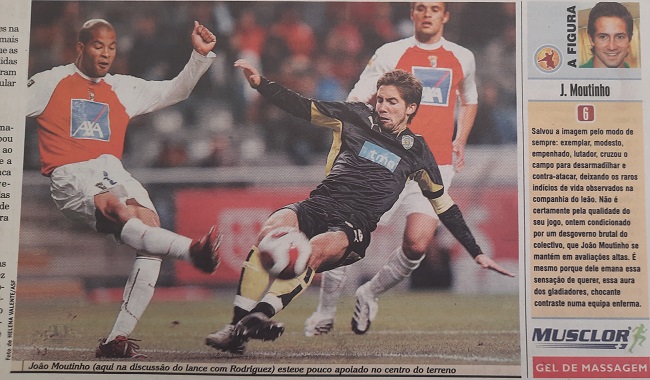
There was a time when Braga was just another middle-class side that could jump from a brilliant season to a disappointing one, as was so common with Portuguese football. In 2007/08, however, the seeds were being planted for the club to take a step further in its organic growth process. With a breathtaking new ground and a side that was starting to resemble the one that would bring the club into title contenders, Braga had a season full of mixed feelings, except perhaps for one night.
The day Sporting came to town, and were completely outplayed by the locals, showcasing a powerful display of potential that, in the following years, the likes of Jorge Jesus and Domingos Paciência would transform into serial winners.
***
Braga’s building blocks for a new era
Braga had enjoyed brief spells of happiness under the likes of Fernando Castro Santos, Manuel Cajuda and Jesualdo Ferreira in recent times. But they never lasted. The club occasionally qualified for the UEFA Cup but never went beyond the first rounds, and despite a Portuguese Cup final in 1998, they were rarely seen at the main events. Club president António Salvador wanted to change that. A businessman in the construction industry, Salvador had a dream of elevating Braga into national royalty.
He embraced the challenge by moving Braga from Estádio 1º de Maio, a sixty-year-old ground that lacked the facilities and the atmosphere, to the recently built stadium on the site of a former quarry, one of the crown jewels of Euro 2004 hosted by Portugal. From that point on, his plan was simple. Invest in talent that the club scouted under the radar, particularly from South America, and try to find managers who could follow a template of attacking, entertaining football that raised Braga’s game.
Managerial merry-go-round
Jesualdo Ferreira was the first name he picked to guide the squad, and he delivered, finishing fifth in his first season. Jesualdo was soon moving to Porto, so Salvador went first for the promising Carlos Carvalhal, who lasted a few months but would return on several occasions to the club in the future, and then Jorge Costa, in his first managerial role. Costa had been deputising for Rogério Gonçalves ever since the previous season, but Salvador saw something in him, and the Portuguese international delivered, finishing fourth in 2006/07 and then winning the Intertoto Cup during the summer before booking a place in the UEFA Cup group stages.
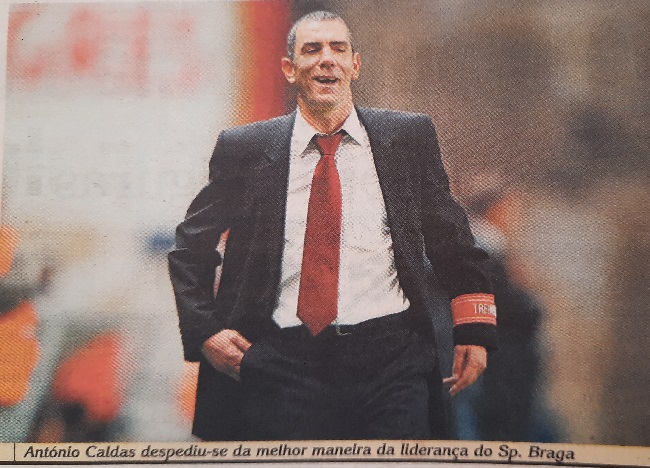
However, come November, things didn’t look good, and eventually Costa was sacked with Salvador turning his attention to Manuel Machado, who had done wonders with minnows Moreirense, before briefly coaching Braga’s big rivals down the road at Guimarães, Vitória SC. But before he had the opportunity to unveil the new manager, there was a decisive match against Sporting to be played. António Caldas, named interim coach for the week, had one task only: to return a sense of trust to supporters and prepare the side for what was to come under Machado.
Bento’s youthful Sporting
Sporting, who had fought for the league title until the very last day of the previous season, wrapped up the Portuguese Cup days later and were emerging as the biggest opponents to Porto in the 2007/08 title race. Paulo Bento was in his third year as manager, after being promoted midway through the 2005/06 season to the job, and led a side that was based essentially on youth prospects from the Alcochete academy plus some interesting international players.
A young Rui Patrício was already acting as third-choice goalkeeper, behind Vladimir Stoijkovic and Tiago, while the likes of Miguel Veloso, Ronny, Custódio, Pereirinha, Adrian Silva, Yannick Djaló and João Moutinho represented the core of the youth-inspired side. Nani had just been sold to Manchester United, and Ricardo Pereira’s four-year stint was also at an end. Sporting had beaten Porto in the Super Cup played in August, but a series of poor results in the first fixtures meant they already trailed FC Porto by seven points when they arrived in Braga for the tenth matchday of the season.
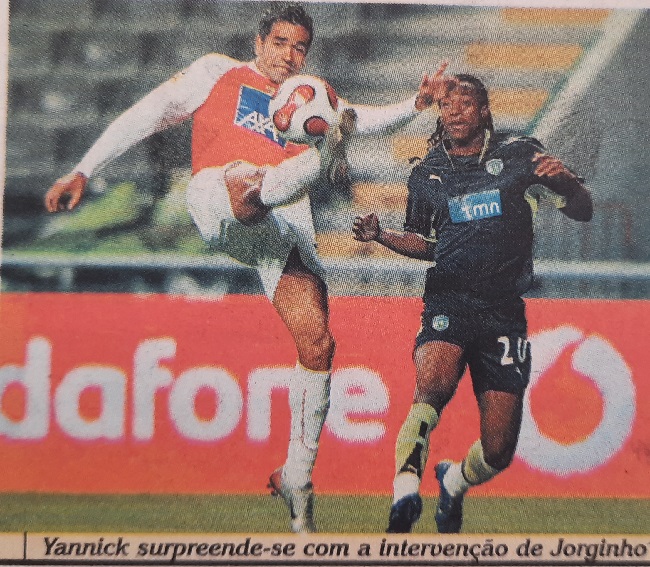
It was a make-or-break match for the Lions while Braga had something to prove. On a cold November night, the two sides locked horns for what many expected to be a tense affair, one that would be decided by small details. What they got was proof that something was brewing in the Quarry all right.
Full-strength Braga go all-out
Caldas decided to go with everything he had, as expected. Paulo Santos, former FC Porto understudy of Vitor Baía, was in goal and João Pereira – who would later briefly coach Sporting in the 2024/25 winning season – played as right-back, alongside Paulo Jorge, Peruvian international Alberto Rodriguez and veteran Nuno Frechaut, a former league champion with Boavista. Brazilians Roberto Brum and Jorginho accompanied Carlos Fernandes in midfield, while Zé Manuel and Wender on the wings partnered the Austrian striker Roland Linz. On the bench, Caldas still counted on veteran Castanheiro, the promising youth graduate Stélvio and the side’s star player, João Vieira Pinto, who was in his last professional season after having played for Boavista.
Bento, on the other hand, went with veteran goalkeeper Tiago – for the time his preferred number 1 choice – with Abel Ferreira, Tonel, Anderson Polga and Ronny in defence. Miguel Veloso, Leandro Romagnoli and Marat Izmailov played behind João Moutinho in support of the recently promoted Yannick Djaló and goalscoring legend Liedson.
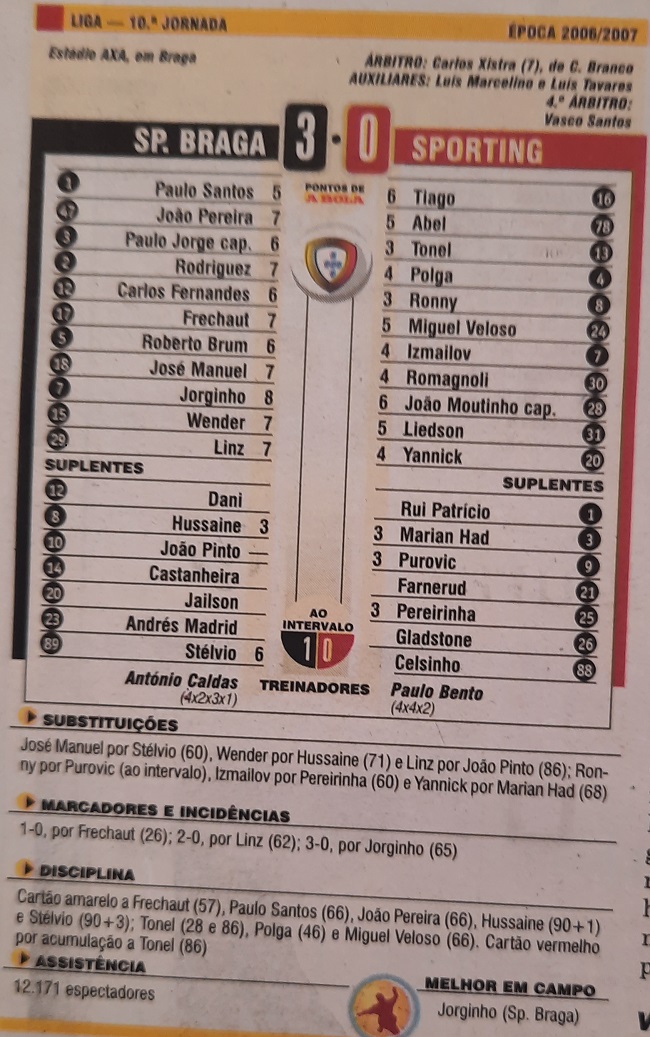
As was usual then, the stadium was far from being even half full. The 30,000-seater arena was too much for a side that rarely attracted a large crowd, and being a late-night kick-off in November, with accessible TV coverage, didn’t help either. The ones who did attend, though, were rewarded in numbers and excitement. Braga started in rollercoaster mode. Before the 10th minute, Tiago had to perform two brilliant saves to stop them from scoring, first from a well-placed Zé Manuel curved ball and then after Wender blasted the ball towards goal from his usual left side.
Braga rewarded for dominant start
The locals had much of the ball and were creating danger frequently, making it inevitable what came to pass on the 25th minute. A clumsy Romagnoli foul on the right side of Braga’s attack allowed Jorginho to place a well-driven cross into the box, with Frechaut winning his duel in the air with the visitors’ defence before knocking the ball past Tiago. The stadium erupted in a roar, while the man who played for Portugal in the ill-fated 2002 World Cup proved he still had it in him. Things could have gone much worse for the Lions if it weren’t for another two decisive Tiago saves in the dying minutes of the first half, seemingly leaving everything open to discussion in the second half.
If only Sporting could raise their game and find Liedson, supporters might think a result was still up for grabs. Bento decided to replace the ineffective Ronny with the Montenegrin striker Purovic, to gain more presence in the box, and Sporting did have a couple of good shots at the start of the second half but Braga were still pretty much in command and could have scored again if Zé Manuel had arrived on time to deflect a perfect cross by Linz into an empty net.
Quick double has Sporting reeling
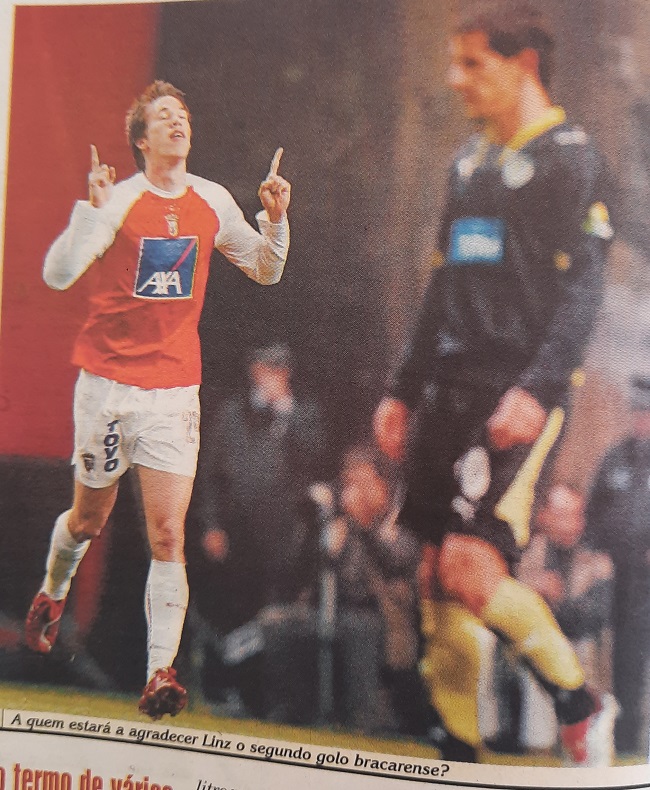
The Austrian would then be on the receiver’s end of a chance minutes later, showing his team-mate how it was done. It was a thing of beauty as the home side moved from the right of the attack, where the recently added Stélvio brilliantly passed to Wendel, right inside the box. Seeing that Tiago was coming his way, the Brazilian backheeled the ball back to the young Portuguese midfielder, who simply tapped to the right, where Linz, surrounded by Tonel and Polga, managed to control the ball and fire in a shot.
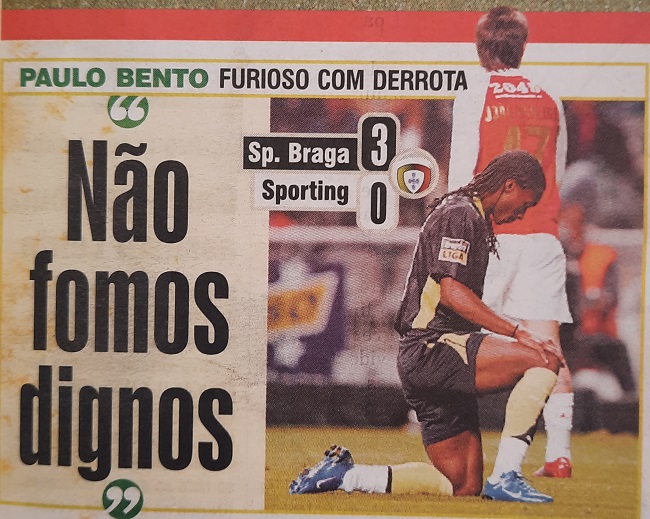
Only two minutes later came the third of the night. A well-placed corner from the left by Wender found Jorginho coming out of nowhere to fire without any opposition right into Tiago’s goal. It was the most spectacular moment in a night full of emotions, and for the first time in decades, Braga was beating Sporting by a three-goal margin. Sporting had a decent claim for a handball inside the box but the referee decided not to point to the spot, and aside from that the Lions were harmless. Bento sent on Marian Had and Pereirinha, but they had no effect on the game.
Tonel loses his head and sees red
Five minutes before the end, it was João Vieira Pinto who got a much-deserved call to play the final minutes against a side he had helped to win the 2002 league championship. Two minutes in, Pinto was savagely assaulted by Tonel, with a kick in the head, which got the centre-back red-carded. The free-kick from Jorginho led to the best of another handful of saves Tiago was forced into, to prevent further humiliation.
The game changed Braga’s spirit, if only momentarily. When Machado finally arrived, Braga were lying eighth in the league table, with just eleven points, but only three behind the last European spot. Everything seemed possible. But the season ended in disarray and he left with three matches to go, with the side still in 8th in the standings and out of the UEFA Cup for the first time in four seasons. Sporting, on the other hand, never really posed any threat to Porto in the title chase and finished a distant, comfortable second. They did win the Portuguese Cup against Jesualdo’s Porto, though, for a brilliant way to end what had been so far a disappointing season.
Jesus and Paciência continue Braga’s ascension
Salvador, though, had seen something that night that persuaded him that he was in the right track. He just needed to find the right manager. In the summer he hired the promising Jorge Jesus, who had performed wonders for Belenenses the previous seasons. With Jesus at the helm, Braga finally became the best version of themselves, and when he was snapped up by Benfica, Salvador once again hit the jackpot with Domingos Paciência.
The former Porto striker led the club to a second-place finish, their best result to this day, and a Europa League final in 2011, the first time any Portuguese side bar the Big Three played in one. From then on, Braga began to collect silverware – Portuguese Cups and League Cups – and to establish themselves as a European regular, often playing in the Champions League as well. A new powerhouse had been born up north, and that night against the mighty Lions, the seed had been planted for what was to come.
By Miguel Lourenço Pereira, author of “Bring Me That Horizon – A Journey to the Soul of Portuguese Football”.
